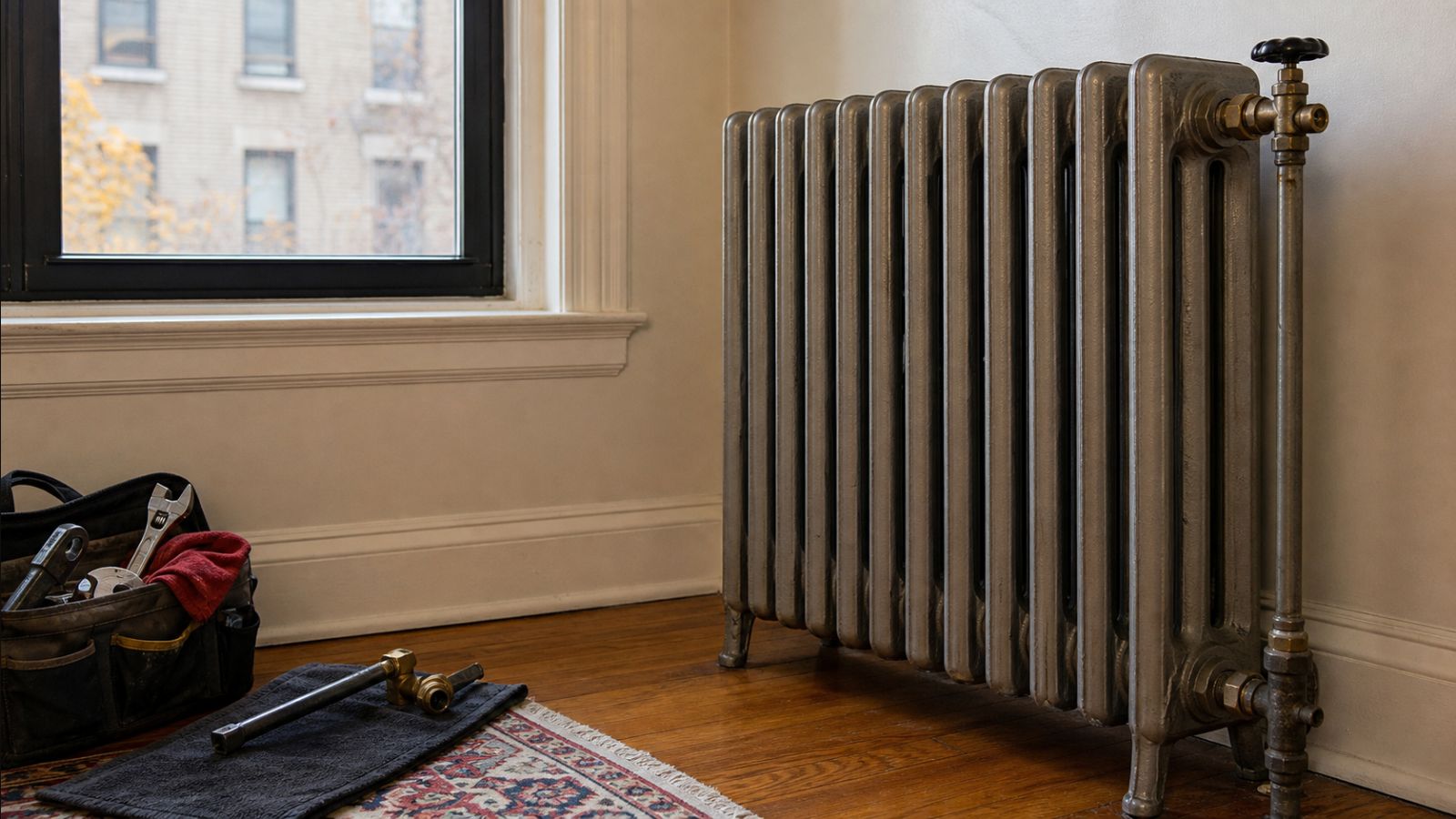
Restore service immediately, document measured temperatures and the repair timeline, and follow the Notice of Violation. NYC requires 68°F from 6 a.m. to 10 p.m. when it is below 55°F outside, 62°F overnight regardless of outside temperature, and hot water at a constant minimum of 120°F year-round. Confirm the current requirement in the cited agency system and in any notice issued for the property.
Determine what failed and how widely
Confirm whether the report concerns heat, hot water, one apartment, one line, or the entire building. Record the time, inside temperature, outside temperature and source, hot-water temperature, equipment status, and resident access.
After a 311 complaint, HPD may notify the owner or managing agent, contact the resident, and inspect. Use HPD Online to check the complaint, violation, and Litigation tab rather than relying only on a phone call.
- Confirm which apartments or building areas are affected and record indoor, outdoor, and hot-water temperatures using reliable methods.
- Check tenant reports, access attempts, boiler or distribution conditions, prior complaints, and the exact HPD order.
- Determine whether an immediate repair, emergency vendor, boiler filing, fuel issue, or broader system correction is needed.
Restore service, communicate, and answer the violation
Treat the outage as an essential-service emergency. Arrange qualified repair, give residents factual updates, and preserve measurements before and after restoration.
- Acknowledge the report, determine the affected area, and record indoor, outdoor, and hot-water measurements.
- Contact the appropriate heating or plumbing professional, arrange lawful access, and correct the immediate failure and underlying cause.
- Confirm restoration with residents and retain work orders, invoices, readings, messages, and photographs where appropriate.
- Follow the Notice of Violation for correction, Notice of Correction, certification, payment, and agency-status requirements.
Know the temperature, payment, and penalty rules
The property-specific notice controls eligibility. HPD publishes the following operational thresholds and potential civil penalties.
| Requirement or consequence | Current HPD rule |
|---|---|
| Day heat, 6 a.m.–10 p.m. | At least 68°F when outside is below 55°F |
| Night heat, 10 p.m.–6 a.m. | At least 62°F regardless of outside temperature |
| Hot water | At least 120°F, 24 hours a day, year-round |
| Initial violation civil penalty | $250–$500 per day |
| Subsequent violation civil penalty | $500–$1,000 per day |
| Eligible $250 payment in satisfaction | Correct within 24 hours and pay within 10 days |
Heat-response mistakes to avoid
Use this list as a final review before filing, paying, certifying, or closing the internal task.
- Using a boiler-room thermostat as proof of every apartment temperature.
- Closing the repair after service returns without answering the HPD notice.
- Using the $250 payment path when the notice does not state that the violation is eligible.
- Failing to track repeat inspections, the Litigation tab, or Emergency Repair Program charges.
Create a minute-by-minute essential-service record
The file should show when the problem was reported, measured, assigned, repaired, confirmed, filed, and cleared.
- Resident report and response timeline
- Temperature readings and access attempts
- Vendor diagnosis, repair, and restoration evidence
- HPD notice, certification, status, and related charges
Verify service and the HPD record
Service restoration is the first outcome, not the final record. Keep the task open through resident follow-up and any required HPD certification or inspection.
Confirm restoration with the affected resident or building staff, then recheck HPD Online for the complaint, violation, and litigation outcome.
This article provides general information and is not legal advice.