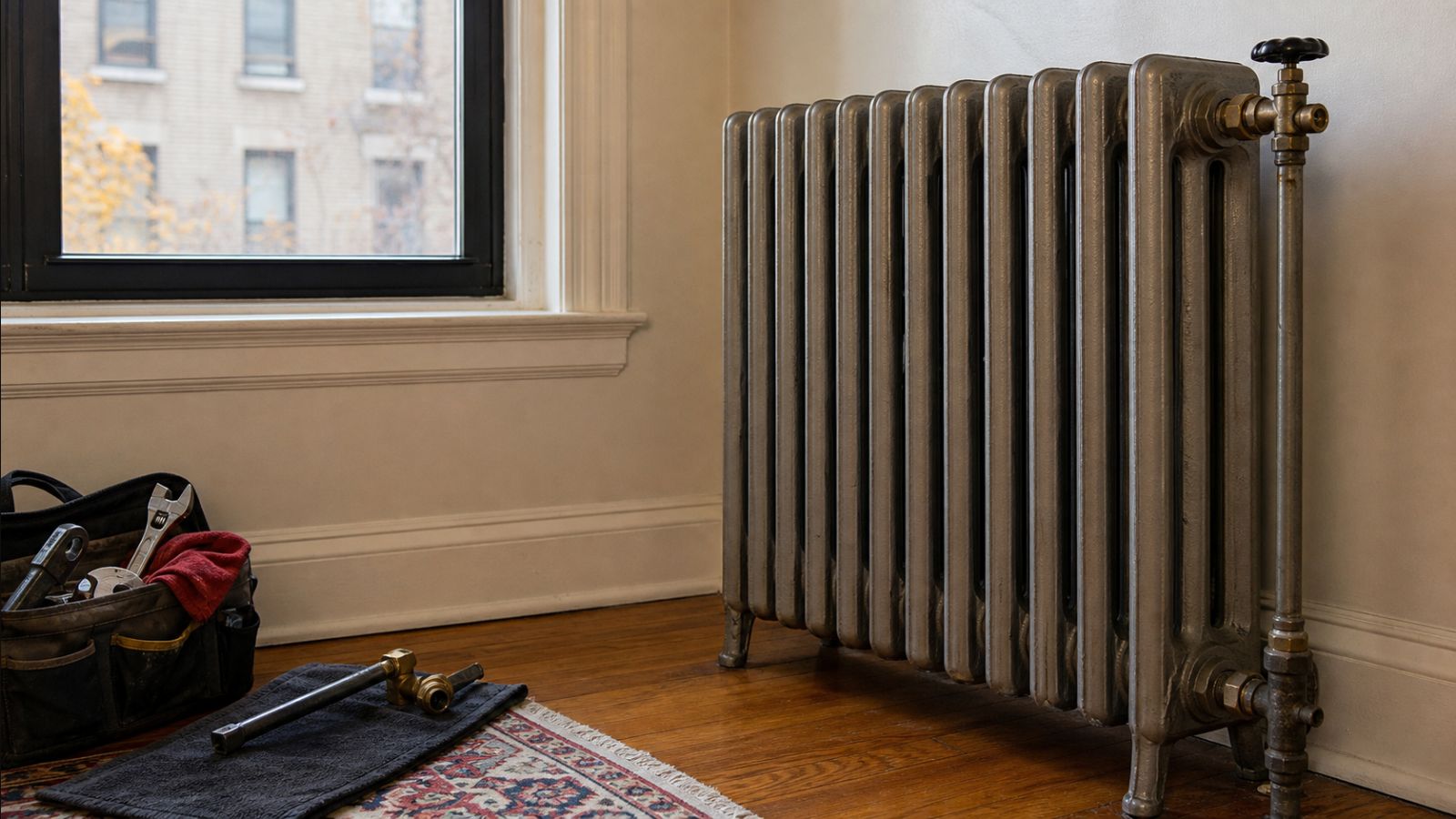
An NYC landlord heat season checklist should be completed before October 1 and used through May 31. For 2026–27, confirm the heating system, response contacts, complaint records, boiler filings, and—if the building is covered—the new steam-radiator notice and inspection process beginning in January 2027. Property-specific notices and current agency instructions control when they differ from a general checklist.
Start with the heat and hot water requirements
NYC heat season runs from October 1 through May 31. HPD states that building owners must maintain the indoor temperatures below. Hot water must be available 24 hours a day, every day of the year, at a constant minimum temperature of 120°F.
| Time | Outdoor condition | Minimum indoor temperature |
|---|---|---|
| 6 a.m.–10 p.m. | Outside temperature is below 55°F | 68°F |
| 10 p.m.–6 a.m. | Any outside temperature | 62°F |
Complete the pre-season building review
Before October 1, review the heating system with qualified service providers and keep the resulting records with the property. NYC DOB says the boiler inspection cycle runs from January 1 through December 31 and that required low- and high-pressure boiler inspections must be performed and filed during that cycle. Confirm the requirements that apply to the building rather than assuming every system follows the same filing path.
- Confirm the heating equipment, controls, pumps, valves, and distribution system are ready for service
- Record the service date, provider, scope, findings, repairs, and follow-up work
- Check applicable DOB boiler inspection and filing status
- Confirm the superintendent, owner, manager, and emergency vendor contact chain
- Review working smoke and carbon-monoxide alarms and current safety instructions
- Add recurring dates and unresolved work to the NYC landlord compliance calendar
Prepare one response record for every report
HPD may try to notify the registered owner or managing agent after a heat or hot water complaint, contact the resident, and inspect when service is not confirmed. A clear response record helps the people responsible for the building understand what happened and what remains open.
- Date, time, apartment, and condition reported
- Reported indoor temperature and the method used to obtain it
- Outside temperature and source checked at the time
- Acknowledgment sent to the resident and the next step provided
- Access requests, inspection findings, and the person assigned
- Repair work, restoration time, resident follow-up, and supporting documents
Treat a heat or hot water outage as urgent
Acknowledge the report, check whether it affects one apartment or a larger part of the building, arrange lawful access, and contact the appropriate heating professional. Keep residents informed with factual updates. If HPD issues a violation, follow the notice’s correction and certification instructions rather than closing the task when a contractor leaves.
HPD says its Emergency Repair Program may restore essential services and bill the owner when an owner fails to restore heat or hot water after a violation. The steps in From a 311 Complaint to an HPD Correction explain how a maintenance report can move through complaint, inspection, repair, and follow-up.
Plan now for the January 2027 steam-radiator process
Local Law 151 of 2025 adds a separate process for owners of multiple dwellings with three or more residential units and steam heating systems. HPD states that beginning in January 2027, covered owners must send an annual child inquiry notice to tenants between January 1 and January 16. Tenant responses are due by February 15, and owners must notify HPD by March 1 for apartments where no response was received and the owner does not otherwise know whether a child under six resides.
The law also creates inspection and recordkeeping duties for covered apartments and building common areas. Required inspections must be completed by a qualified person under HPD’s rules. Review the official forms and applicability details now; do not wait until the annual notice window opens.
Close the loop and retain the record
After service is restored, confirm the outcome with the resident, save the work record, and schedule any follow-up inspection or permanent repair. If a complaint or violation exists, monitor the official record until the required agency step is complete.
EstatesCheck can keep heat-season dates, maintenance requests, tenant messages, vendor records, and supporting documents connected to the property. It helps an owner organize the response trail; it does not determine legal compliance or replace HPD, DOB, or professional instructions.
This article provides general information and is not legal advice.