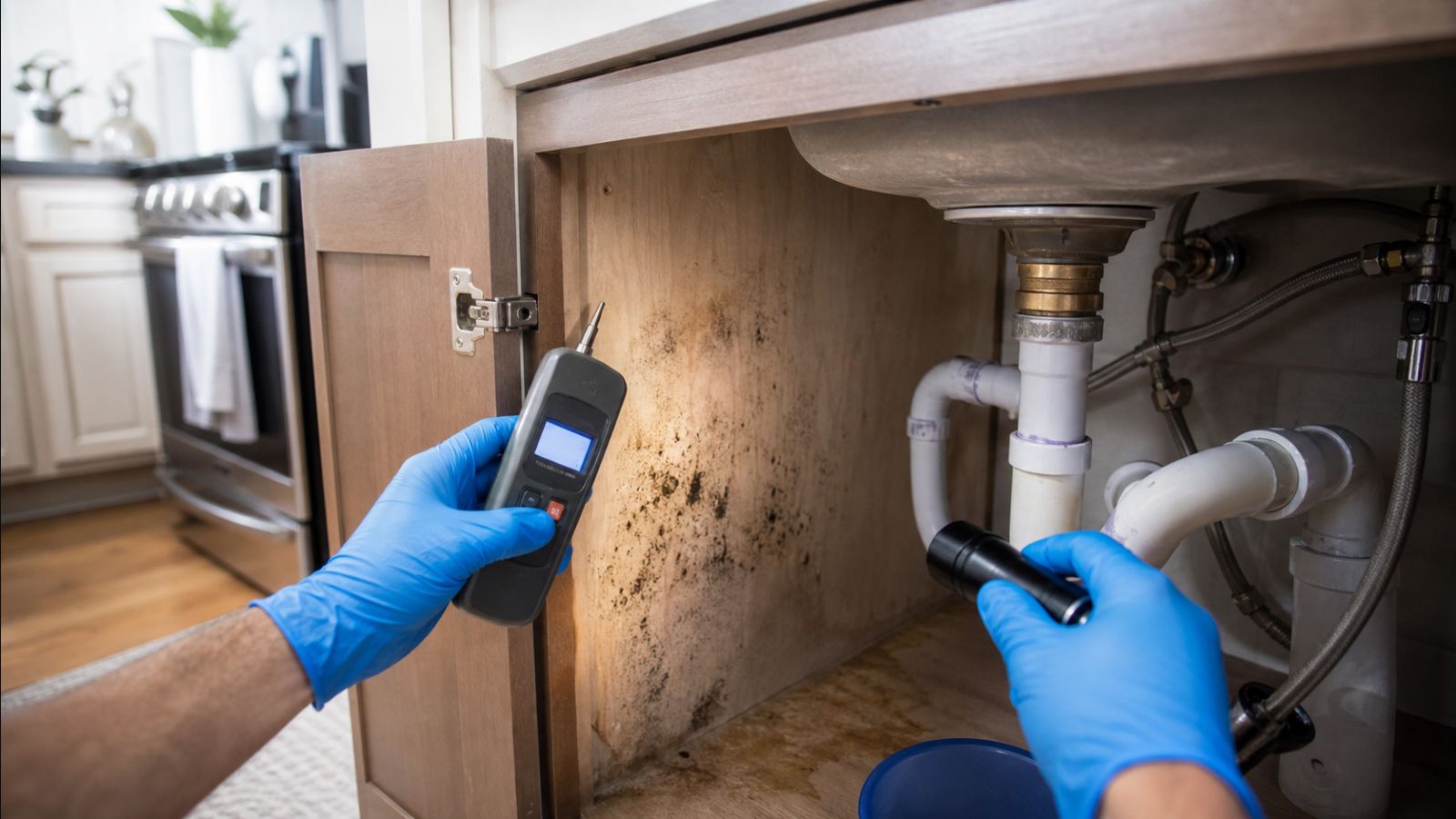
Identify whether the violation concerns mold or pests, its class, mold area, building size, and whether HPD already reinspected it. Local Law 55 requires safe remediation of the underlying moisture or entry condition, condition-specific forms, and—in many cases—licensed contractors, affidavits, and filing receipts. Confirm the current requirement in the cited agency system and in any notice issued for the property.
Classify the hazard before hiring or filing
Local Law 55 applies to residential buildings with three or more apartments. Confirm whether the record is mold, mice, rats, cockroaches, or another pest; then record the class, affected area, building unit count, and underlying leak or entry point.
For more than 10 square feet of mold in a building with 10 or more units, HPD says the owner must hire independent New York State-licensed mold assessor and remediator firms. Pest remediation must use integrated pest management, and pesticide application must be performed by a licensed pest professional.
- Identify the violation order, affected rooms, square footage or severity, resident reports, and building conditions.
- Trace leaks, moisture, cracks, holes, waste, and pest pathways before selecting the work scope.
- Confirm whether trained or licensed personnel and particular containment, cleaning, or integrated pest-management practices apply.
Remove the cause, remediate safely, and file the right evidence
Cleaning visible mold or applying pesticide without repairing moisture, cracks, water sources, or entry points does not complete the Local Law 55 workflow.
- Stop active water entry and address the source of the allergen condition.
- Perform mold remediation or integrated pest management using the practices required for the scope.
- Document access, findings, treatment, repair, cleaning, resident communication, and follow-up inspection.
- Certify or otherwise clear the HPD violation within its stated process and verify status.
Use class, area, and pest type to set the deadline
HPD publishes the following classification and correction periods. The notice and current form control.
| Class | Typical condition | Correction period |
|---|---|---|
| A | Smaller mold areas described by HPD | 90 days |
| B | Intermediate mold areas or pests other than mice, rats, or cockroaches | 30 days |
| C | At least 30 square feet of mold in a room, or mice, rats, or cockroaches | 21 days |
Mold and pest mistakes that prevent removal
Use this list as a final review before filing, paying, certifying, or closing the internal task.
- Using the same certification form for every class and building size.
- Hiring one company to serve as both required independent mold assessor and remediator.
- Treating a Defect status as closure when required affidavits are still missing.
- Correcting visible growth or pests without repairing moisture, water, cracks, gaps, or other underlying conditions.
Keep assessment, remediation, and filing evidence
Preserve the investigative report, resident complaint, access, photographs, contractor licenses, DEP filing receipts, affidavits, certification, and HPD inspection result.
- Resident report, violation, and access record
- Moisture or pest-source assessment
- Contractor credentials, treatment, repair, and cleanup evidence
- Certification and follow-up condition check
Meet both removal conditions
A spray treatment or painted wall is not closure. Confirm that the source, hazard, follow-up condition, and HPD record have all been addressed.
HPD says post-2018 mold and pest removal generally requires both visual verification by HPD and the appropriate affidavits or supporting documents.
This article provides general information and is not legal advice.